UnCeiling You: High-Performance Leadership without Burnout
You didn't burn out because you're weak. You burned out because you're the one everyone depends on — and nobody ever defined where your responsibility ends.
UnCeiling You — High Performance Leadership Without Burnout is for high-functioning leaders who are ready to rise without running themselves into the ground.
Host Dr. Natalie Luke — PhD, former Senior Vice President in a STEM company, author, and leadership performance consultant — breaks down the real drivers of burnout in high performers: unclear ownership, over-responsibility, and urgency culture that rewards reaction over results.
Each episode combines peer-reviewed research with real conversations and practical strategies so you can do what most leaders never learn: lead at your highest level without paying the cost showing up in your health, your relationships, or your team's performance.
Whether you're carrying too much yourself or leading a team where someone else is — this podcast was built for both of you.
🎧 New episodes weekly. Subscribe and start leading in a way that's sustainable, powerful, and completely yours.
UnCeiling You: High-Performance Leadership without Burnout
The Corporate Leadership Trap: Accountability vs. Control and Why Your Best People Are Burning Out
Use Left/Right to seek, Home/End to jump to start or end. Hold shift to jump forward or backward.
If you have ever walked out of a meeting where nothing was assigned — but you already knew you were going to be the one to follow up, fix it, and make sure it actually happened — this episode is for you.
Corporate leadership burnout is at an all-time high. But most conversations stop at the symptoms: overwork, stress, exhaustion. This episode goes deeper. Host Natalie Luke breaks down why the most capable leaders burn out not because of how much they are doing — but because of how much they are doing that was never clearly theirs to own.
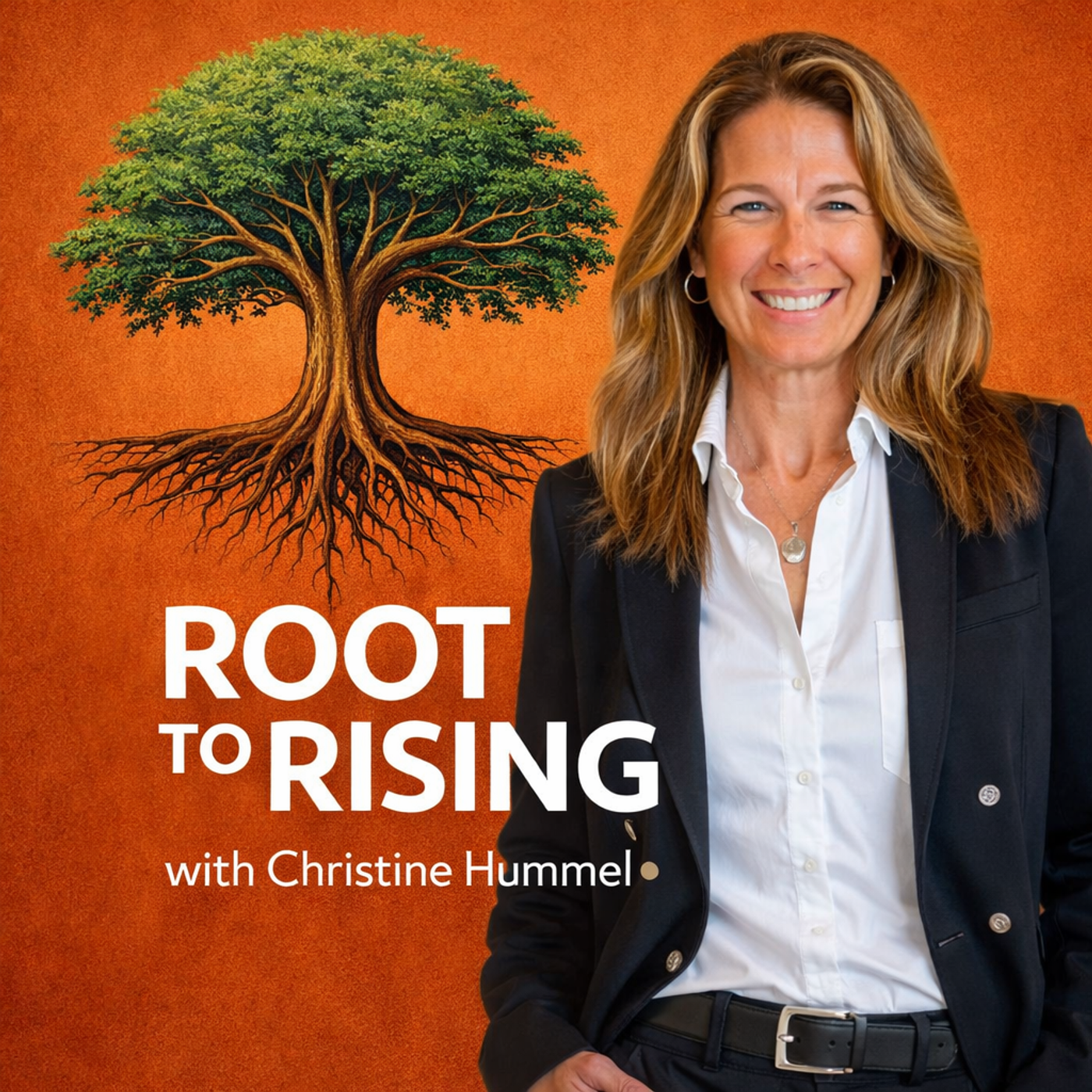
Natalie is joined by Christine Hummel, a senior leader who has built her career across CVS, McKesson, and Sanofi, and host of the Root to Rising podcast. Christine shares the pivotal moments that shifted her from being the person holding everything together — to building a system where ownership is clear, her team actually holds the work, and she can lead at the level she was built for.
This is not a productivity episode. This is an ownership episode.
WHAT YOU WILL LEARN
- Why diffusion of responsibility means the most conscientious person in the room always picks up what everyone else leaves behind
- The critical difference between accountability and control — and why confusing the two is costing you your team's performance and your own capacity
- How Christine redefined accountability across complex organizations with multiple stakeholders and moving parts
- The exact moment Christine stopped being the one holding everything together — and what changed when she did
- Why unclear corporate leadership communication is one of the top five causes of employee burnout according to Gallup
- How to step in when execution breaks down without taking the work back
- Why the leaders who say "I wish I had taken more risks" were often too buried under over-carry to afford the margin risk requires
- The one diagnostic question that reveals whether your organization has an ownership problem right now
RESOURCES AND LINKS MENTIONED
Responsibility Reset Notebook — free download to help you map what is yours, what is not, and what is floating: unceilingzone.com/rrnotebook
Christine Hummel's podcast, Root to Rising: Click Here!
Work with Natalie — keynotes, leadership workshops, and organizational diagnostics for HR and L&D leaders: unceilingzone.com
RESEARCH REFERENCED IN THIS EPISODE
- Culture Partners accountability study: 40,000+ participants, 85% of employees could not identify what their organization was trying to achieve
- Gallup: five causes of employee burnout including unclear communication from managers and unmanageable workload
- Harvard Business Review: mid-level managers burn out from responsibility without authority
- 2026 data: middle managers see performance drop by up to 70% when accountability becomes ambiguous
- Gallup: employees who feel solely responsible for driving outcomes are twice as likely to experience burnout
📘 UnCeiling Your Career — At Any Age helps you battle self-doubt, build strategic plans, and keep a
Disclaimer: This post contains affiliate links. If you make a purchase, I may receive a commission at no extra cost to you.
Learn More at https://unceilingzone.com
Let me ask you something. Have you ever walked out of a meeting where technically nothing was assigned to you, but you already knew you're going to be the one to follow up, fix it, and make sure it actually happened. No one said it, no one asked you. But you knew if you didn't pick it up, it would just sit there. Now, here's what's interesting about that moment. In the room, you probably look like you were the most engaged person there, nodding, processing, already building a plan, maybe even excited about it. But that feeling, that quiet knowing, it isn't just worth ethic. It's a signal. And what it's signaling is something most high performers never stop long enough to question. Now here's what I want you to understand about that moment. It's not random. It's not because you're a pushover. And it's not because your colleagues don't care. It happens because something deeply wired into how high performers operate. In organizational psychology, there's a pattern called diffusion of responsibility. It's one of the most well-documented dynamics in workplace behavior. And here's what it says: when ownership isn't clearly assigned in a group, the most conscientious person in the room defaults to picking it up every time. The same trait that makes you exceptional in your job, that drive, that follow-through, that inability to let things fall is the same exact trait that makes you the one who carries the weight everyone else leaves behind. And research confirms it. A cultural partner study scanning over 40,000 participants across hundreds of organizations found that 85% of employees said they don't know what their organization is actually trying to achieve. 85%. Because ownership was never clear to begin with. And when ownership isn't clear, work doesn't disappear, it moves to the most responsible person in the room. And I want to be clear, this isn't just about a performance issue. This is an organizational execution issue. When ownership is unclear, your strongest people compensate, and that compensation has a measurable cost. Slower decisions, higher turnover, and a leadership bench that never quite develops. It breaks down because ownership was never defined in the first place. The type of ownership that should be there. And the most capable person in the room, the one that sees the gap, who feels the urgency, who can't just let it sit there, they pick it up every time. And at first it looks like leadership, but over time it becomes something else. Now I'll be honest about something. And if a decision needs to be made after the work is done, I'll ask the question under what conditions will we move forward so that we're all clear. I cannot stand Groundhog Day where we sit there and revisit the same question over and over and over. And if it's not said who does what by when, and under what conditions will this decision be made, if it's not asked, I will ask it every single time. Because for me, the absence of clarity isn't neutral. It's a cost, it's a countdown clock to dropped execution, to frustration, and eventually burnout. And here's what Gallup found when they studied this. They identified five causes of employee burnout. Do you know what two of them were? Unclear communication from managers and an unmanageable workload. But here's what they didn't name explicitly, and what I believe is the missing link. A significant piece of unmanageable workload isn't actually your workload. It's the workload of everyone whose ownership was not defined. The work doesn't vanish, it just lands on whoever's paying attention. A recent Harvard Business Review article put it plainly. Early career employees burn out from ambiguity and lack of control. Mid-man level managers burn out. And I want you to hear this from responsibility without authority. That's not a willpower problem. That's a structure problem. And I want to say this directly to you if you're listening. If you ever thought, why am I always the one picking this up? Why does nothing move unless I push it? Why does this keep coming back to me? You're not imagining it. You're not too sensitive, and you're definitely not alone. Because the research backs you up. Research shows that one in four professionals will stop taking action mid-project the moment ownership becomes unclear. Not because they don't know what to do, but because no one defined who was allowed to do it. Think about what that actually looks like. Someone is mid-project, they hit a point where it's unclear who has the final say or who owns the next step. And even though they have the skill, even though they have the knowledge, even though they could move it forward now, they freeze. That was never defined. The work stalls not because of the of a not because of a capability gap, but because of a ownership gap. And the most recent 2026 data shows that middle managers, the very people holding the bridge between strategy and execution, see their performance drop by up to 70% the moment accountability becomes ambiguous. That is not a people problem. That's an architectural problem. This shows up everywhere in cross-functional projects where everyone contributes, but no one owns the outcome. In a matrix organization where your title suggests authority, but your actual decision rights are a question mark. In a fast-moving senior level discussion where alignment is assumed because everyone was in the room, but ownership was never spoken out loud. I've been there too. I've been under the weight. In moments where everything mattered and everything felt urgent. And what I've come to believe, backed by what I've seen in leaders and teams, is this a lot of what we call burnout isn't just how much we're doing, it's about how much we're doing that was never clearly ours. Clarity replaces weight. Structure, scales, pile up and it doesn't. And when you get clear on what's yours and what's not, what's floating out there, meaning no one owns it and it's waiting for someone to pick it up, you're in the in the gap between both, something shifts. Not just your workload, your identity as a leader. The system I've built around this is called the precision responsibility system. It starts with one diagnostic question. In your organization, does every outcome have a named owner? Because if it doesn't, the weight will land somewhere, and I can usually tell you who it's under. And that shift, that exact transition, is what we're going to hear in today's conversation. My guest is Christine Hummel, and she's led in organizations like CVS and McKesson. She's a fellow podcast host, and she's been the one who has walked through the fire of being the one who held it all, from being buried under the weight to building a system where ownership is clear, where teams actually held the work, not just her alone, and she can finally lead at the level she was built for. Let's get into it.
SPEAKER_00Yeah, it's definitely different having a podcast interviewer to a podcast interviewer. So this should be fun. Yes.
SPEAKER_01So yes, you've built your career across organizations like CVS, McKesson, and now Sanafi. Starting earlier in your career and growing into senior leadership roles, when you think back to your earlier roles, what were your primary, what were you primarily focused on? And how did you start to understand what ownership or accountability actually meant in those environments?
SPEAKER_00I would say earlier in my career, when you start success and accountability is a lot of individual responsibility that you put on yourself. So if I had a goal or an outcome that I needed to achieve, I felt like individually I had to take myself and do everything to achieve that goal. So I think when you start earlier in your career, at least for myself, it was I was very motivated, but I felt like it it was me driving the bus and only me. And that evolves over time. As you become more experienced, you have more situations that allow you to feel different when you're achieving an outcome or see different results.
SPEAKER_01Pause right there because what Christine just named has a real cost attached to it. Gallup research shows that employees who feel solely responsible for driving outcomes are twice as likely to experience burnout. Twice. This is what I call founding over carry, where drive becomes default ownership, where the habit of holding everything starts to feel like the only way things get done. If I don't, it won't, is where it always starts.
SPEAKER_00Yes. Um, I don't know if people feel that men and women feel that equally, or if that's something women put upon themselves that I felt like I had to do everything, say yes to everything, and be the best that I could be and achieve the best outcome. Um, I don't know if that comes from just the drive I have, the competitiveness that I've always had within me, probably comes from a little bit of sports and a little bit of culture. But I've always been competitive. So I always wanted to achieve and grow. I still do today, but it's a little bit of a different flavor of that.
SPEAKER_01So as you move into roles with more responsibility and complexity, where you have more stakeholders there in more moving parts and you have to depend on others. What changed for you and how you approach that role when you were no longer responsible for just your own work, but you were responsible for the outcomes across a broader system?
SPEAKER_00Yeah, you learn in a large organization pretty quickly because it is so complex. There's so many layers, there's so many different approvals and processes that you have to indirectly influence. And you have to always educate whoever you're talking to on the other side. If it's a decision maker, if it's someone that's going to help you indirectly on the project, teach them the why. Why are you doing something? Once I've always done that, but when you start learning on a broader scale that you can influence by teaching people the why, that becomes very powerful. And the story that I think about is at one of my companies, we created a cell and gene service model. And cell and gene was something, this was probably 10, 12 years ago, something that people didn't hear about yet because it was so early in the drug pipeline. Cell and gene are obviously new and novel for the biopharma industry. And so people, I was asking people to do things, you know, like we have to buy new refrigerators to be able to store these sub-zero products. And they're looking at me like, well, these refrigerators cost hundreds of thousands of dollars. Why? Right. Or we have to deliver a different patient model because these patients are one-time infusion versus chronic care. And so when you when you educate someone the why, because they've done something for so long and it's worked, you have to teach them the why so they evolve and they try to show up differently. So I've always done the why. And then I also built trust in other people. I learned quickly that having the mentality of doing it all yourself is not sustainable from a burnout perspective. And you may feel that once in a while, sense of accomplishment when you achieve that great goal, but it's pretty lonely to celebrate by yourself. And it's not as rewarding. I learned in those examples I just gave and other examples that if you teach others, you grow others, you educate others, having a sense of purpose for that group to achieve that outcome is a lot more fulfilling. So I learned to trust, even though I didn't necessarily know what they were going to do. I had to trust that they could do it. Um, and I would say over time, that has evolved and allowed me to become a different leader today. I trust my team 100%. I delegate until they prove to me not to. That's kind of the model that I've taken.
SPEAKER_01This is a turning point that most leaders talk about, but very few actually make. Because the mental model she just described, it flips the default. Most high performers operate from I'll take it back when they don't get it right. What Christine is describing is I give it forward fully and I build a system to verify. That's not just trust. That's the difference between being the system and leading the system. When ownership is clear and authority is explicit, performance holds. The moment it becomes ambiguous, that's when things and people start to break down. Was there a moment where you realized that doing it yourself wasn't the answer? Was there a pivotal thing that happened that caused you to say, Whoa, I need to, I need to do more of that delegation and that trust?
SPEAKER_00Probably came um, I would say in my first role at CVS, I tried to do everything. There was a little bit I was starting to integrate. I would say my transition probably to McKesson, but I it was also parallel to a lot going on personally. So I do think women have this, I need to be everything to everyone all the time, or at least I had that expectation that I had put on myself and others had of me. So it was almost like a crux or a pivot point that personal and professional mixed. And it was a point where I said, something has to change because I can't continue to show up the best version of myself personally or professionally. And it's just, you know, your kids get older, there's more responsibilities, there's there's more you're dealing with, um, you know, showing up as a partner. And then same for the professional side. Like I was limited of what I could do. I felt like I was kind of stuck and I felt like I could do more if I grew my team, if I educated more, if I shared responsibility. So it became more not about being accountable for the tactics or the actual, you know, the drive of what we're working on. It was more becoming the architect or the orchestrator for my team, like building the strategy and having the questions asked to get them to the outcome, and then celebrating the cess of that outcome together. So I think it was just probably the crux of age, personal ongoing, professional ongoing, um, and just self-realization that something had to change.
SPEAKER_01Right. For I know in my my particular world, I had a situation where um we were my team was charged with writing 15 peer review papers within one year. And our house burnt down personally in my gosh.
SPEAKER_00Oh my gosh, that's a lot.
SPEAKER_01It is a lot, and and it was like, okay, the house burned down. Fortunately, we had insurance, and insurance took care of it. We had a place to stay, we had roof over our our mouth, you know, heads, food in our belly, and uh, but the house had to be rebuilt and this huge project. So it and it was much the same as what you were saying. It's like, wait, I want to get it all done, but it's not gonna happen. It's by me alone. It's gonna be, you have to trust your team for sure.
SPEAKER_00Yeah. I mean, also something now that you talk about that, it's also, you know, the the goals and companies and priorities that the companies have, it seems like it's more and bigger, right? Bigger ideas. So is it also a combination that as we've evolved as humans, we're getting more intelligent, right? Uh, with with digital enhancements, AI, knowledge, right? We're just smarter humans as as evolution continues. Is it that there's just this expectation of you have to have these bigger ideas and move faster? Like to your point, you had 15 unit papers due in in one year, which take immense time. So is it just the expectations also shifted? And and we realized you can't do it on your own. You have to build a stronger team to be able to respond to the market because we are moving so much faster and we're so much more sophisticated.
SPEAKER_01Right. So, in those, because things are so much more sophisticated and you have to move faster, there's how you become accountable and what you can actually control are two different things. And so, how do you manage the, okay, I'm accountable, but I don't have the control? How do you start to manage that in your head so that you're sleeping at night?
SPEAKER_00Yeah, exactly. So I I kind of redefined the definition of accountability for myself, for ownership. So if I'm responsible for a strategy within my organization or an outcome, right, which is delivered upon, you know, executive leadership, I feel a sense of responsibility for that larger purpose or that larger strategy. And I need my team to help build the outcome. Like I can't do it by myself. So I've redefined how I show up, you know, and how I define accountability. Accountability used to be I have to do everything, and it was more of a numbers game. It was more quantity versus quality. Now it's more about the strategic vision, the questions asked. And you realize too that you get motivation out of teaching others and you get motivation when it's a group, you know, when when everyone has this outcome that we've delivered together, it's much more fun to celebrate together than by yourself, right? So I I guess redefining the definition of accountability. And it's again, every day my motto to my team is you know, are we making an impact to the business or to the patient? So every meeting we have, be intentional about. And I'm accountable for teaching my team. The characteristics of how they show up. I'm accountable to make sure that along this path to our outcome, right, they're guided. So I'm accountable for them. But there's a lot of pitfalls along the way that I cannot control. And that's okay. You have to be okay with it. And you have to learn how to react to things that are out of your control and adapt and start again, right? So if someone makes a mistake, we're all humans. Again, one of my philosophies is everyone has good intent. No one's doing anything.
SPEAKER_01This right here. This is where high performers get stuck, and nobody names it clearly. Let me name it. There's a difference between accountability and control. This is key. And most leaders don't even realize they've confused the two. Accountability is owning the outcome. The result is mine to answer for. Control is owning every step along the way. Every decision, every verification, every emotion, every follow-through. And the trap goes like this the more you care about the outcome, the more tightly you grip the execution. Because releasing any piece of this feels like you're releasing accountability. But here's what's actually happening. When you control everything, decisions slow down. The team stops thinking for themselves. You become the single point of failure. And the outcome you are trying to protect, it suffers anyway. Gallup found that unclear communication from managers is one of the five top five causes of employee burnout. And here's what it looks like in practice. When a leader never gets precise about what's theirs to own, their team never gets precision either. The blur doesn't stay at the top, it flows down, and everyone absorbs what should have been clearly defined from the start. What Christine just described, I'm responsible for the strategy, but not for everything along the way. That's not a leader loosening her grip. Precision is what creates accountability. Control is what destroys it. That precision, that's leadership.
SPEAKER_00So if you have that intent, people make mistakes, and I'll support the team, we'll rally, we'll redefine, and we'll move on. Right.
SPEAKER_01Yeah, and that um for me I love watching the leaders that are able to say, okay, what's the learning moment here and how do we improve in the future? I had a habit of being super hard on myself, and therefore I would be super hard on my team. And it was something that I had to let go of. What did you ever experience anything like that?
SPEAKER_00Yeah, it's exhausting, isn't it? Yes. When you're hard on yourself and then you take it out on your team and you look at their faces and you're like, oh my gosh, what did I just do? It is, you just I think you have to have a little bit of experiences that you and I probably both had to feel it, to say, oh, that was uncomfortable, or oh, that didn't sit well with my team, or I don't like the way that I'm showing up like that. Like that's not me. And then understand why am I acting different? Why am I showing up and pushing my team like this? This is not who I am. So again, we all get to points and we have to pivot and adapt. And again, through experiences, you get that feeling where you're like, nope, I'm not gonna go there because I know the outcome. This is just gonna feel this is gonna feel gross. Like, I'm not gonna go there.
SPEAKER_01Yeah. And so um how in what situation when you have this team that you're working with, you're responsible for the strategy, you're responsible for, you know, and why the strategy is what it is and why we're going after it. When do you decide to step in more or less? Do you have like a formula for that?
SPEAKER_00So I always start, I put everyone together on like the launch of the strategy, whoever's gonna be involved in any way, shape, or form that's gonna build it, or we have a decision, an indirect decision maker. I'll put them all on a call to kick it off. I will tell them that what we're working towards, the priority. I will tell them the vision. I will tell them why we're doing it. And then if we if this works right, here's the impact that we will see to X, Y, and Z. I want to get their initial investment early on, both professionally and personally, because people are motivated, you know, to do the right thing. So I will let them ask questions, I will just let them give feedback if it's too much for them. And I will appropriately at that time delegate, based on what I know from each person and their skill set, their role in building that strategy. So I will clearly define the roles and responsibilities of each person of how I've built it in my brain, and I will communicate that and I will tell them why that person is going to, you know, handle the data analytics in that project. And I will walk through the expectations with, again, everyone on the call of that person of what I want to see. So it's clear definition, early alignment from every stakeholder involved in that. And then I will have check-ins along the way, not to check that they're doing their work, to check that they're not going the wrong direction where the outcome would be different, because then they've wasted their time. So I still need to be the guide to that strategy. So I'm have guardrails for them and I have checkpoints with them. And if they they also have an open communication door to say, if you need something, pull me in. If you're getting resistance, you need help with escalation, I'm there to support you no matter what, right? So I give them all the options that they need in order to be successful. And then if anyone has issues with it, I said, follow up with me if it's too much, if you don't have the bandwidth, that's fine. You know, we'll find someone else to help accomplish that. And then at the end and the outcome, I do celebrate the success. So I think it's a lot of time and prioritization that leaders have to find time to celebrate the success. And we should make more time for it because people like the feeling of acknowledgement and reward for the hard work that they put in. And so I will always send an email to broader leadership. I will always acknowledge people on a team call. I will ask them to present their case study of what they did together collaboratively in a team meeting on an annual basis. If there's awards, you know, I will give them awards. So and I'll have them each talk about it. Like, what did you like about it? Well, this is rewarding for you. Again, people want to be invested and they want to learn versus giving them the direction and being the the you know, not dictator, but like just being directive in terms of what their role is, let them be invested and learn from it.
SPEAKER_01Yeah, I love that. So let's talk about like if the execution, you know, you provide the guardrails, the check-ins, but execution somehow breaks down, not because the people don't care, but because things just maybe the assumptions at the very beginning were not correct. And so we learned something. How do you handle those situations?
SPEAKER_00I will directly get involved because again, I'm responsible for the outcome. So I will get involved, I will do kind of a root cause assessment to say, hey, what's going on? Like, why isn't this working? What we talked about. I will quickly pull another people if I need to. I will take people off of the assignment if it wasn't something that they were fulfilling. Again, we're still responsible. So I will adapt quickly and I will make changes. And the biggest difference for me, it's not personal, it's just it's a professional move.
SPEAKER_01And let's take a second to notice the sequence Christine just described. Christine didn't step in to do the work, she stepped in to diagnose why ownership broke down. That's an entirely different leadership move. One keeps you in the cycle, the other breaks it. The best leaders I've observed don't intervene at the task level, they intervene at the ownership level, and then they step back out. Step in to re-clarify, step out when it's clear. That's the discipline.
SPEAKER_00People need to understand that, but I will autocorrect pretty quickly. I will teach them the why, and I will teach them for the next time. Here's what we should do. But as as you know, you you have to move fast, and there's very small margin of error uh today in in the corporate world that we work in. And I will communicate that. I will tell them, listen, we have to get this done. This is nothing you did intentionally, but we have to, I have to execute on this, and we do as a team.
SPEAKER_01Yep. Very good. That sounds very healthy. And so I really appreciate that. There are also times when people just don't speak up, and there's times when they do. How do you encourage people to speak up when they see something going awry?
SPEAKER_00So I will notice if people are very quiet on calls, and you always have the people that are more vocal than not, you know, people some people are just more extroverts than introverts, some people don't like to speak in a public setting. So you have a lot of people, you know, in IT or data analytics potentially, they don't like to speak in a large group. So I try to make sure I know from a skill set perspective early on when people join my team, what are their motivators, what are their distractors, what do they feel comfortable, what is their growth opportunities? And I will work with them or I'll ask their leader to work with them. And I can catch on pretty quick who doesn't like to speak up on calls. So what I'll do is I will schedule one-on-ones with that person to allow them to give them that free space to talk to me directly and just talk about the team. I may talk to them about the project or something else to have them feel that comfortability. If they don't feel comfortable talking to me, I may ask their leader to come become more involved. But it's okay that they're quiet as long as they're delivering and executing on what the responsibility was. Not everyone has to have a voice and it's what everyone's skill set, you know, and characteristics are is how they show up.
SPEAKER_01Yep, there you go. So I'd like to pivot a little bit now to talk about your podcast, if that's okay. Yeah, of course. Of course. You have grown within your senior roles, and then you start the podcast. Can you talk a little bit about why you started that?
SPEAKER_00Yeah, why when I had nothing else to do, right? And a senior leadership role would I think to add more. Um, and just like you for yourself. And so I did start a podcast about a year ago called Root to Rising. The the way it was developed is I have uh currently a 22-year-old daughter back at the time I started thinking about this. She was 17, 18. And her and her friends, every time I would talk to them or I'd visit her in college, it was always like, How do we get a job? What do I major in college? You know, like how do you um how do you interview? It was just these basic questions. And remember, that was during a time of COVID also, um, when she was a senior. So there was a little bit of, in some states, a lack of confidence. They were, you know, at home often, they didn't have that same socialization. So they were trying to figure out, figure it all out and how to gain confidence. And I felt like I just was repeating myself over and over, saying the same thing. And I'm like, there's gotta be a better way to educate these younger generation of women and teach them, you know, to be confident, find their own value, find their own purpose. And there's not one path for everyone. But what I've learned since the podcast is that I try to interview experienced professionals like this conversation today. And I wanted the younger generation to hear the more experienced. But what I found is the experienced professionals are gaining just as much insight, just like your podcast, right? To those that are doing it today that are been doing it for 20, 30 years. So now it's, as you know, there's just this level of need for this curiosity and knowledge that we've all been living. And what a better way to share our stories with anyone that wants to hear it.
SPEAKER_01Yeah. That's, and I love the podcast for that because you learn so much from all these different stories, from the types of insights. And the people that are on the podcast probably think, oh, well, that's not a big deal. And then when other people hear it and react, they're like, yeah.
SPEAKER_00And it's interesting when when the person you're interviewing, because a lot of people have never done this before, when you're interviewing them at the end, they'll always say, I never thought about all of that, or I never thought about my own professional journey in that way, or I forgot about that. So you are rewarded too, as an interviewer, right? To to hear people discover and think about just their journey and like, oh God, I got here and I did get here and I'm doing great. You know, it's like this this they're talking through it. It's kind of fun to watch.
SPEAKER_01Yeah. So what are some of the patterns that you've seen that that you were surprised that this pattern is there?
SPEAKER_00Probably the most common thing that I've heard um that I've seen that I was surprised at is they wish they would have taken more risks. When I ask always what would you have done differently in your career, I would have taken more risks. I wouldn't have overthought it and thought that I couldn't do it. I would have just done it. I would have had less fear.
SPEAKER_01And this is worth sitting with because when you are the system, you literally cannot afford to take risks. Think about everything that you're holding. The weight of the strategy, the weight of the outcome, the weight of the emotions in the room, the weight of the tasks nobody claimed, the weight of the execution nobody tracked, the weight of the decisions that keep coming back to you, the weight of the follow-through that was never anyone's job except yours. That's not a roll, that's a pileup. And when you're under all of that, every risk feels like one more thing you cannot afford to drop. Every risk requires margin. Margin requires space. Space requires clarity about what's actually yours to hold. When ownership is vague, you hoard, you compensate, you hold tighter, not because you're a control freak, but because letting it go feels like the whole thing will collapse. Clarity is what creates the space to grow, not just organizationally, personally. So here's what I want to ask you. What is one conversation you've been avoiding? The one where you need to say out loud, I don't think this is mine to own. Not to abandon the work, not to drop the standard, but to name it, so that that person can step into it, so that the project has a real owner, so that things can actually flow. Because the risk isn't quitting, the risk is clarity. And clarity for a person who has been the system for a long time feels terrifying. But it's the only risk that actually makes everything else possible.
SPEAKER_00Every time I hear it, you know, I get chills when I hear that. But that was very surprising to me because you think everyone is in their role, you know, they're 50-something years old, and this is what they plan to do. And a lot of them, my one of my most memorable podcasts was a woman, she became a pharmacist, but she wanted to actually become a physician. And when she was in college, her counselor and one of her professors told her that as a woman, she shouldn't be a physician because it was unfair to her work-life balance. And so in that moment, she made a decision to be a pharmacist. And to this day, I asked her, Do you regret making that decision? Do you still want to be a doctor? And she's retired now. And she said, Every day, I wish I would have become a doctor. Yeah. And that to that day, like that breaks my heart. And so I want every younger woman to hear that. If you want to be a doctor, be a doctor, right? Yeah. Oh my gosh.
SPEAKER_01Um for folks that come on to listen to the podcast, what are some of the things that you want them to walk away with after they've digested your episodes?
SPEAKER_00Yeah. I hope they learn to let go of what people think of them, let go of the expectation that others have for you that you think you will be happy, let go of overthinking things and do more of taking risks, do more of thinking about what truly is your purpose, what makes you happy, and define your own expectations. I'm hoping through the stories that they hear these women, um, a lot of them have competence, but what they could have done differently allows the younger generation to say, well, I'm gonna do then what I want to do. I'm gonna do what I find my value to be. And a lot of the younger generation women, I don't want them to think that there's one path, right? I want them to define their own path that's right for them. So hearing the different people's stories is really hoping everyone finds their own purpose.
SPEAKER_01Part of that is the notion of radical responsibility. I see a lot of my podcast friends using that term and taking radical responsibility, but bringing it back to what we were talking about before. You can't be personally responsible for everything. How would you put the line between taking re radical responsibility, but yet knowing what you own and how to lead a team?
SPEAKER_00That's a good question. So I think a lot of women get accountability. There's a difference between their worthiness and being accountable and responsible for everything. So it's redefining the personal responsibility in terms of you have to find, you know, what your motivators are, what your long-term goals are. For mine, it's building teams, it's transformation and it's innovation of new and different models in the healthcare market. And stay true to those three or four motivators that you have for yourself, and no one else can define those but you. Um, you can't be told by your parents, you know, you can't be told by your boss, you can't be told by anyone. You have to figure out what feels good for you. And then you should define your own responsibility of what you want to be held accountable for. That's all your decision. That's no one else's decision. And then you share that with your teams. You share your teams why you're here today. You share with your teams your motivators and have your team share it back. You know, the first thing I do when I'm building a new team or hiring a person for the team, I don't even ask about their experiences so much. I'm looking for the characteristics that they have. Are they enterprise-wide mindset? Are they forward-thinking, like the growth mindset, right? How do they communicate? And you can teach people a lot of different things in this industry, but having those characteristics and how they show up is very important when I build a team. So it's it's communicating early with your team, who you are, what your motivators are, understanding what your team is and each and every person on your team's motivators, and then making sure that they're in the right position that they can deliver on that for themselves. And then guess what? In the end result, you have a great team that's very strong and very diverse.
SPEAKER_01So for someone who is capable driven and step stepping into bigger roles, how would you advise them to expand their leadership without becoming the person that has to hold everything together in the end?
SPEAKER_00The definition of leadership, I think we also need to redefine part of a really good leader is to be vulnerable. And so you don't have to show up and hold everything together. It's okay every now and then to have a oh crap moment or to say, I don't have the answer. Does anyone else on the call have the answer? So the definition of a leadership, a leadership for me is someone that is, you know, strong enough and resilient enough and has adaptability and can lead everyone again as the architect, as the orchestrator, moving in the same direction to make the business impact. So looking at the people that are wanting to take the next role, I always encourage people don't just look at your next role for the next title. Look at it in terms of actually the description of what you're going to be doing. Does it fulfill your motivators? Does it have for me transformation and innovation? If it doesn't, I don't care what role it is, I probably won't take it because I know I won't get fulfilled and I won't be the best leader. So I do think it's more of redefining leadership, being vulnerable, understanding your team and their characteristics, where their skill set is, and then again, keeping everyone moving in the right direction.
SPEAKER_01Fantastic. Is there anything that you would like to end the this conversation with that you would like people to remember? And I will make sure people have links to your podcast.
SPEAKER_00Oh, thank you. Thank you. I guess I would just have anyone that's listening to to always take the risk. Um what's the worst thing that can happen? You'll figure it out, right? And the one person that can give you the confidence is yourself. Don't let people impact you with what they're saying. You know, don't let people put you down. Just be resilient and adapt and move forward. Fantastic. Thank you so much for joining us on the Uncealing You podcast. Thanks, Natalie.
SPEAKER_01If there's one thing I want you to carry out of this conversation, it's that most high performers don't burn out because they can't handle the work. They burn out because ownership has never fully been defined. So the weight of everything unassigned settles on the shoulders of whoever cared the most. And that's not a people problem, that's an organizational design problem I help fix. A landmark study of over 40,000 professionals found that 70% of organizations have execution at risk, not from laziness, not from incompetence, but because nobody clearly owned what lives between the strategy and the result. You heard that shift in Christine's story. From doing everything herself to building a system where ownership is clear and the team actually holds the work. That's what I keep seeing. When ownership is clear, things move. When it's not, the steps get missed. The decisions stall, the handoff breaks down, the communication gaps widen, the emotions go unaddressed, the escalations land on the wrong desk, and the space between the strategy and the result, it becomes someone's silent second job. And that someone is always the most responsible person in the room every time. So here's my question for you this week. What's sitting in that space right now? In between your organization's strategy and its results that was never actually assigned to anyone. Because somewhere between that plan and the outcome, someone is absorbing it. And I'm willing to bet you already know who that is. If this landed on you, I created something to help you see it in your own world. It's called the Responsibility Reset Notebook. It helps you map what's actually yours, what's not, and what's really out there floating. Grab it at unsealingzone.com slash R R Notebook. Again, that's unsealing zone like the ceiling above your head, U N C E I L I N G Zone.com slash R Notebook. And if you're sitting in that role thinking, things only move when I push them, that's not a you problem. That's a structure problem. And I'm working with leaders and teams on exactly this, helping them create clarity and ownership. So execution improves without them becoming the bottleneck. And if you're an HR or LD leader listening right now, thinking this is exactly what my managers and high performers need to hear, this is the work I directly bring to organizations through keynotes or leadership lessons. Reach out and let's talk today about what that looks like for your team. As always, take what's yours and let the rest move through the system.

.jpg)
Podcasts we love
Check out these other fine podcasts recommended by us, not an algorithm.